
Why Your Website is Not Ranking Even After SEO
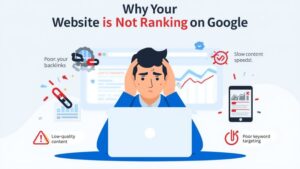
Why your website is not ranking even after SEO is a common problem for businesses and beginners. You might have optimized your website, added keywords, and published content, but still see no improvement in rankings. The truth is, SEO involves more than just completing a few tasks. It needs the right strategy, consistency, and attention to detail.
Many people still don’t understand why your website is not ranking even after SEO despite doing basic optimization.
Poor Keyword Strategy
One of the main reasons your website is not ranking, even after SEO work, is choosing the wrong keywords. Many websites try to rank for highly competitive keywords without having enough authority.
Instead, focus on long tail and low competition keywords. These keywords are easier to rank and help you attract the right audience. Good keyword research is essential for successful SEO.
Low Quality or Thin Content
Content quality plays a major role in rankings. If your content is too short, generic, or does not provide real value, Google will not rank it.
To address why your website is not ranking even after SEO, you need to create detailed and helpful content that answers user questions. Include examples, explanations, and practical insights that make your content stand out.
Poor On-Page Optimization
On-page SEO is often ignored or done incorrectly. Missing keywords in titles, headings, meta descriptions, and URLs can hurt your rankings.
Each page should be properly optimized with a clear focus keyword, structured headings, and natural keyword placement. This helps search engines understand your content better.
Lack of Backlinks
Backlinks are one of the strongest ranking factors. If your website does not have enough quality backlinks, it will struggle to rank.
Many beginners focus only on content but ignore link building. Getting backlinks from relevant and trusted websites improves your authority and ranking potential.
Technical SEO Problems
Technical issues can stop your website from ranking even if your content is good. Slow loading speed, poor mobile optimization, broken links, and indexing issues can affect performance.
Make sure your website is fast, mobile-friendly, and easy to navigate. Fixing technical SEO problems improves both user experience and rankings.
No Internal Linking Strategy
Internal linking is a simple but powerful SEO technique. If your pages are not connected, search engines cannot properly crawl your website.
Link your blog posts to each other and to your main pages. This helps distribute authority and improves visibility across your site.
Lack of Consistency
SEO is not a one time effort. Many people publish a few blog posts and expect results quickly. When they do not see results, they stop.
Consistency is key. Regularly update your website, publish new content, and improve existing pages. Over time, this builds authority and improves rankings.
Ignoring User Experience
User experience is an important ranking factor. If users leave your website quickly, Google considers it a negative signal.
Your website should be clean, easy to navigate, and provide clear information. Good user experience keeps visitors engaged and improves SEO performance.
Not Targeting Local SEO
If you are a local business, ignoring local SEO is a big mistake. You need to optimize your content for location based keywords.
Adding your business location in content, optimizing Google Business Profile, and getting local backlinks can improve your chances of ranking in search results.
Conclusion
Why your website is not ranking even after SEO is usually due to a combination of poor keyword strategy, weak content, lack of backlinks, and technical issues. Identifying and fixing these problems is essential to improve your website’s visibility and performance.
If you are still struggling to understand why your website is not ranking even after SEO, focusing on consistent optimization, quality content, and proper SEO techniques can make a significant difference.
Working with a digital marketing strategist in Kannur can help you identify gaps, implement the right strategies, and achieve long term growth in search rankings.